
A normal morning turned nightmare
It began like any quiet fall morning in suburban Pennsylvania. I stepped outside to water my roses, watch the sunrise, maybe pick up a stray cat’s mess on the lawn. It was October 10, 2025 — crisp, damp, silent. But when I opened my gate, I was hit by a stench so vile it made tears spring to my eyes.
My chest constricted, my stomach twisted. In that moment I knew: something was terribly wrong. The smell was like rotting meat, like a carcass buried in leaves just beneath the soil. I staggered forward, eyes watering. And then I saw it.
The creature in my garden
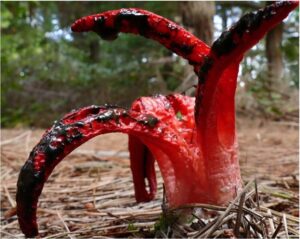
By a corner of the flowerbed lay a glistening, red-orange mass. At first glance it looked like entrails — wet, slimy, moving slowly. It curled, pulsed, unfolded. The thing had arms — four to seven thick, tentacle-like fingers radiating outward, slick with slime. Each “arm” glistened, coated in a dark, olive-green ooze that seemed to breathe. Flies buzzed around it, crawling over its surface, drawn to the smell.
My heart thundered. Was it a mutated insect? A lab experiment gone wrong? Or, as the images in my mind screamed: an alien lifeform, dropped into my very backyard? Panicked, I fumbled for my phone, hands trembling, and took photos from a safe distance.
Googling the monster
In tears and gagging, I typed: “red slimy tentacle creature in yard smell of rotting flesh.” The results were weird. Warnings, grainy photos, explanations I didn’t believe. But one name kept coming up: Devil’s Fingers fungus — Clathrus archeri (also called Anthurus archeri).
Turns out: this horrifying thing had a real name. It’s a stinkhorn fungus, sometimes called the “octopus stinkhorn,” known to emit a nauseating odor of decay to attract flies, which then spread its spores.
Yes — this grotesque, slime-dripping thing in my garden was not extraterrestrial. It was a fungus. But to see it, smell it, feel its alien geometry … it felt like a horror movie.
Origins of “Devil’s Fingers”
Clathrus archeri originally hails from southern hemisphere regions like Australia and Tasmania, but over the last century it has spread to Europe and North America.
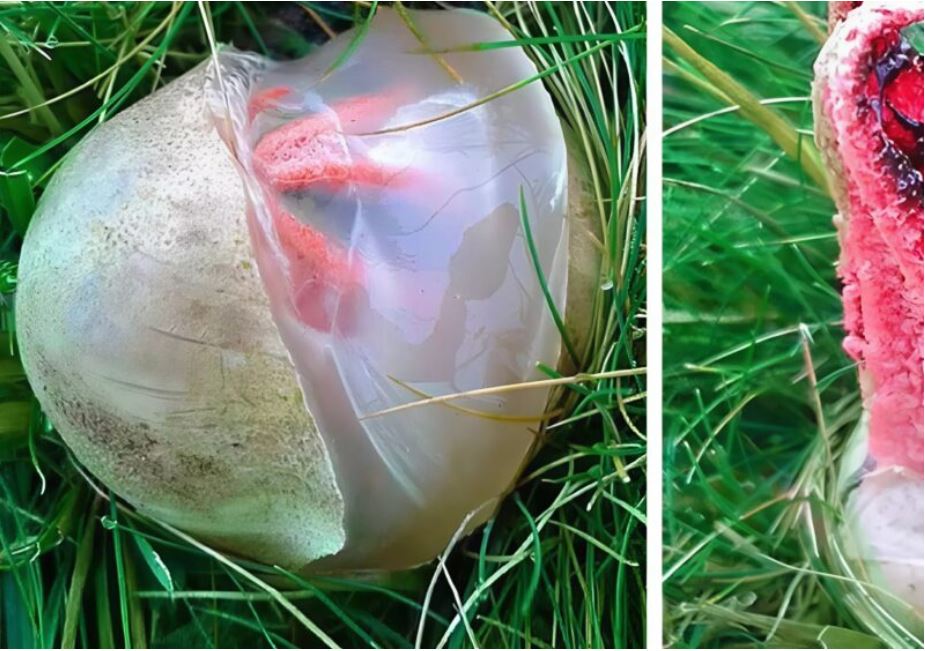
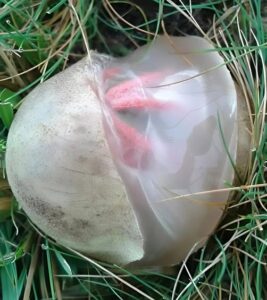
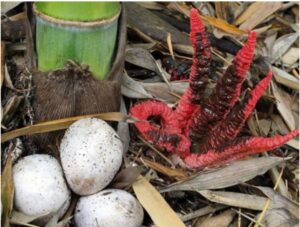
It starts life hidden underground in a slimy white “egg” about 2–3 cm in diameter. Then from that egg, its arms erupt — typically 4 to 7 slender red fingers that arch outward. The upper surfaces carry a dark, smelly spore mass (gleba).
The smell — rotten flesh — is its lure. Flies land, pick up spores, and fly them elsewhere. It’s part of nature’s grotesque pollination system.
In North America, it’s rare but not unheard of — several documented sightings exist. Some speculate it arrived via soil, mulch, or plant shipments over decades.
My emotional ride
When I first discovered it, fear held me rigid. I barely slept that night. I haunted online forums, Reddit threads, mycology groups — scanning images that mirrored the nightmare in my yard. Some users described identical scenes — “alien baby,” “flesh flower,” “do not touch.”
I even considered calling authorities. I paced my backyard at dawn, swinging a flashlight, expecting something to move again.
But the more I dug, the more the real horror fascinated me. To realize that in a quiet American suburb, a creature normally associated with remote forests could sprout in mulch near my rosebeds — that felt almost cosmic.
Neighbors whisper, media buzz
Word leaked. The neighbor across the street asked if I was making a horror show. People drove by, peering over fences. A local blogger snapped blurry photos. A friend urged me to contact the local news. Before I knew it, the story was making its rounds on local neighborhood Facebook groups.
The idea that this grotesque fungus could show up in U.S. backyards overnight triggered fear: what if it’s spreading? What else is under our lawns, waiting?
My decision — and the twist
I hired a fungus expert (a local mycologist) to come examine the specimen. Under magnification, he confirmed: spores of Clathrus archeri. Harmless to mammals in casual contact — though smelling it for long can be nauseating. The expert said it thrives in damp, decaying wood mulch and leaf litter. He carefully removed it and sealed the area for sterilization.
Here’s the twist: he told me there was no danger in removing it — the real danger is letting it sit. Spores could spread in mulch, invade nearby gardens, trigger allergies in rare cases. He advised replacing mulch, avoiding imported soil from unknown regions, and watching other humid corners.
He also paused and told me: “You were lucky. It could have been worse — a dangerous mold, a toxic fungus, or worse.” His calm shocked me.
So now I walk around my yard at dusk, checking dark corners, removing leaf litter, breathing fresh air, grateful I wasn’t harmed — but haunted by the memory.
Conclusion: horror hides in plain sight
What I found in my garden was neither corpse nor alien — but nature’s own grotesque marvel. The Devil’s Fingers fungus is nothing short of a miniature horror: red tentacles, slime, deathly odor, flies crawling everywhere. And yet it’s a living organism, part of the world’s ecology.
Maybe tomorrow, a similar horror could sprout in your houseplant pot, under a tree, or in your compost pile. Nature hides her monsters in plain sight.
I still pass that corner of my yard with dread. I sometimes look — half expecting another fingered horror to emerge.
But I tell people: don’t panic, stay curious. Sometimes the scariest things are simply living — not alien or supernatural, but nature’s darkest art.
And that’s the truth behind what I thought was alien remains …