
The Discovery
Supatra Baisri, a 30-year-old café owner in Nakhon Nayok, Thailand, was taking her usual walk near an industrial estate one early morning. The sun was rising soft and pink, but the air smelled of burning rubber and heat.
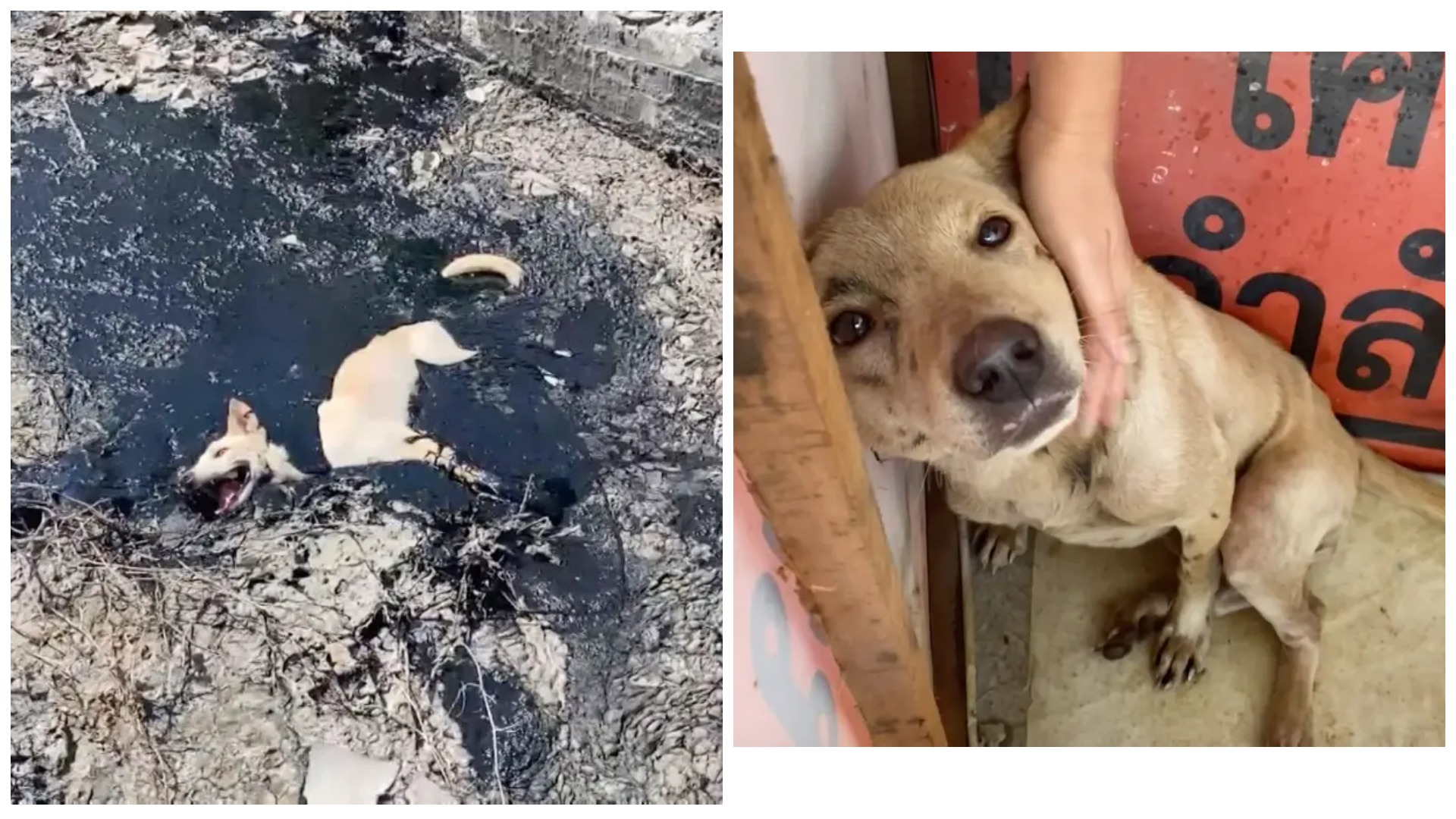
Then she saw it: a stray dog, light brown fur matted, body almost swallowed by a pool of rubberised asphalt. Only a tiny corner of her mouth was above the thick, gooey surface. She could see the dog panting, whimpering, desperate for air.
Supatra froze. The rubber was deep and sticky. If she tried to step forward, she might be trapped too. She looked for a stick, a branch — but nothing long enough. She couldn’t reach the dog safely.
Panic, Then Determination
Her heart pounded. She dialed local emergency services. Moments stretched like hours. Meanwhile, the animal thrashed, trying to pull a paw free. The smell of rubber and oil filled the air.
Workers at the industrial plant nearby watched. Some avoided eye contact. Others whispered. Supatra begged, “Please help.”
The Rescue
Within minutes, a team with heavy machinery arrived: excavator, shovels, buckets. They worked carefully. Mud and rubber were cut away piece by piece. Supatra knelt, offering water in a bowl. The dog lapped a few drops, still trembling.
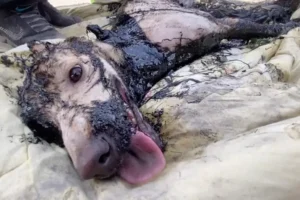
Rescuers used petroleum benzine oil to soften the rubber stuck in the dog’s coat, to prevent fur damage and clean the skin. The smell made them cough. The dog winced, but somehow, she stayed conscious.
Two hours passed but finally: the last fragment of rubber fell away. The dog, now freed, collapsed. Supatra’s voice broke as she called her “Mali.”
Aftermath and Healing
They carried her to a vet. Her skin was raw, patches of fur missing, minor burns from the adhesive rubber. The vet treated her with antiseptics, ointments, gentle baths. Supatra stayed by her side.
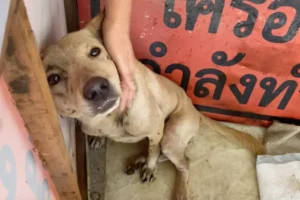
Day by day, Mali improved. She drank, then ate. She wagged a weakened tail. She shook when touched at first, but gradually allowed soft pats.
Volunteers noticed how anxious she was around strangers. But in Supatra’s presence—quiet, kind—she relaxed.

Reflections
Rescuers and vets spoke out: people must be careful how they dump waste. Toxic mixtures, rubber, asphalt — these can kill animals. If Mali had not been spotted, if the rescue had been delayed longer, she might have perished.
Yet, against the odds, she pulled through.
Conclusion
What started as a scene of despair ended as a quiet miracle. Mali survived the molten prison. She now lives with Supatra, in a home filled with soft blankets, warm meals, and safety.
Her scars remain — a patch of fur missing, skin pink where once rubber clung. But her spirit is unbroken.
Supatra laughs sometimes when Mali tries to chase butterflies, perhaps unaware of the danger she escaped.
In the end, Mali’s story is more than rescue. It’s proof that one person’s compassion can change a life. Even when the world seems sludge and silence, someone listening can be everything.
Sources
-
NextShark: “Woman Rescues Terrified Dog Trapped in Molten Rubber in Thailand” (NextShark)
- Heroic moment a dog trapped in molten rubber is rescued NEW YORK POST
-
NewsFlare: “Heroic moment stray dog stuck in molten rubber is saved in Thailand” (newsflare.com)