

Your Skin as a Window to Your Health
“Your skin can be a window into your inner health,” says Dr. Joseph Jorizzo of Wake Forest University. And when that window shows strange, net-like patterns across your arms or legs, it may be a sign that something deeper is going on inside your body.
These marks, known as livedo reticularis (LR) or mottled skin, aren’t always dangerous. Sometimes they are harmless and temporary, caused by cold weather or stress. But in other cases, they can point to serious diseases, including autoimmune disorders, vascular conditions, or even stroke risk.
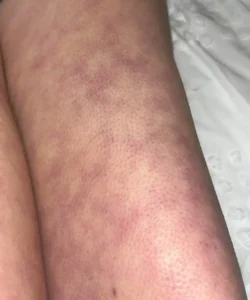
What It Looks Like
Livedo reticularis appears as purple, lace-like or net-shaped patches on the skin. They most often show up on the arms, legs, or torso. The patterns may fade when the skin warms up — or persist, which can be a red flag.
It affects infants (often harmlessly) and adults, especially women aged 20–50. While the marks themselves are painless, their cause may not be.
The Two Types of Livedo Reticularis
-
Primary (Physiological) LR
-
A benign, temporary reaction to cold.
-
Common in children, young adults, and people with fair skin.
-
Disappears when the body warms.
-
-
Secondary (Pathological) LR
-
A persistent pattern linked to serious health conditions.
-
May signal autoimmune diseases, vascular problems, or blood clotting disorders.
-
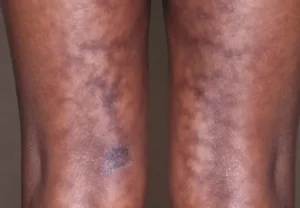
Possible Causes of the Strange Patterns
According to research published in Verywell Health and medical journals, LR can be linked to:
-
Autoimmune diseases: Lupus, rheumatoid arthritis.
-
Blood disorders: Antiphospholipid syndrome (clotting disorder).
-
Vascular diseases: Sneddon’s syndrome (linked to strokes), polyarteritis nodosa.
-
Infections & shock: Cold exposure, sepsis, septic shock.
-
Medications: Amantadine (used in Parkinson’s and MS).
-
Other conditions: Thyroid disorders, pancreatitis, cholesterol embolism.
-
End of life: In rare cases, LR has been noted in people approaching death.
What Doctors Recommend
For harmless primary LR, no treatment is needed — just keep warm. But if the marks persist or worsen, doctors may prescribe:
-
Anticoagulants – to prevent blood clots.
-
Corticosteroids – to reduce inflammation.
-
Vasodilators & circulation aids – to improve blood flow.
Lifestyle changes like quitting smoking, exercising, and controlling blood pressure and cholesterol are also critical.
The Occult Twist
Throughout history, skin markings have been linked to mysticism and even fortune-telling. Some cultures viewed the lace-like skin patterns as signs of spiritual imbalance or divine warnings. But modern science makes it clear: your body isn’t sending a message from the stars — it’s sending a medical SOS.
The Bottom Line
While most cases are harmless, persistent or recurring livedo reticularis could be your body waving a red flag.
💡 If strange patterns appear on your skin, don’t ignore them. They might vanish after warming up — or they might be the first sign of a hidden health crisis.
➡️ Pay attention. Your skin could be the map that saves your life.
Disclaimer: This information is not intended to be a substitute for professional medical advice, diagnosis or treatment and is for information only.
Sources
-
Wake Forest University School of Medicine – Dr. Joseph Jorizzo’s dermatology research
-
Verywell Health – What Is Livedo Reticularis?
-
National Institutes of Health (NIH) – Livedo Reticularis and associated conditions
-
ScienceDirect – Livedo reticularis: Clinical significance and systemic associations
-
American Journal of Medicine – Case studies on Sneddon’s syndrome and LR