
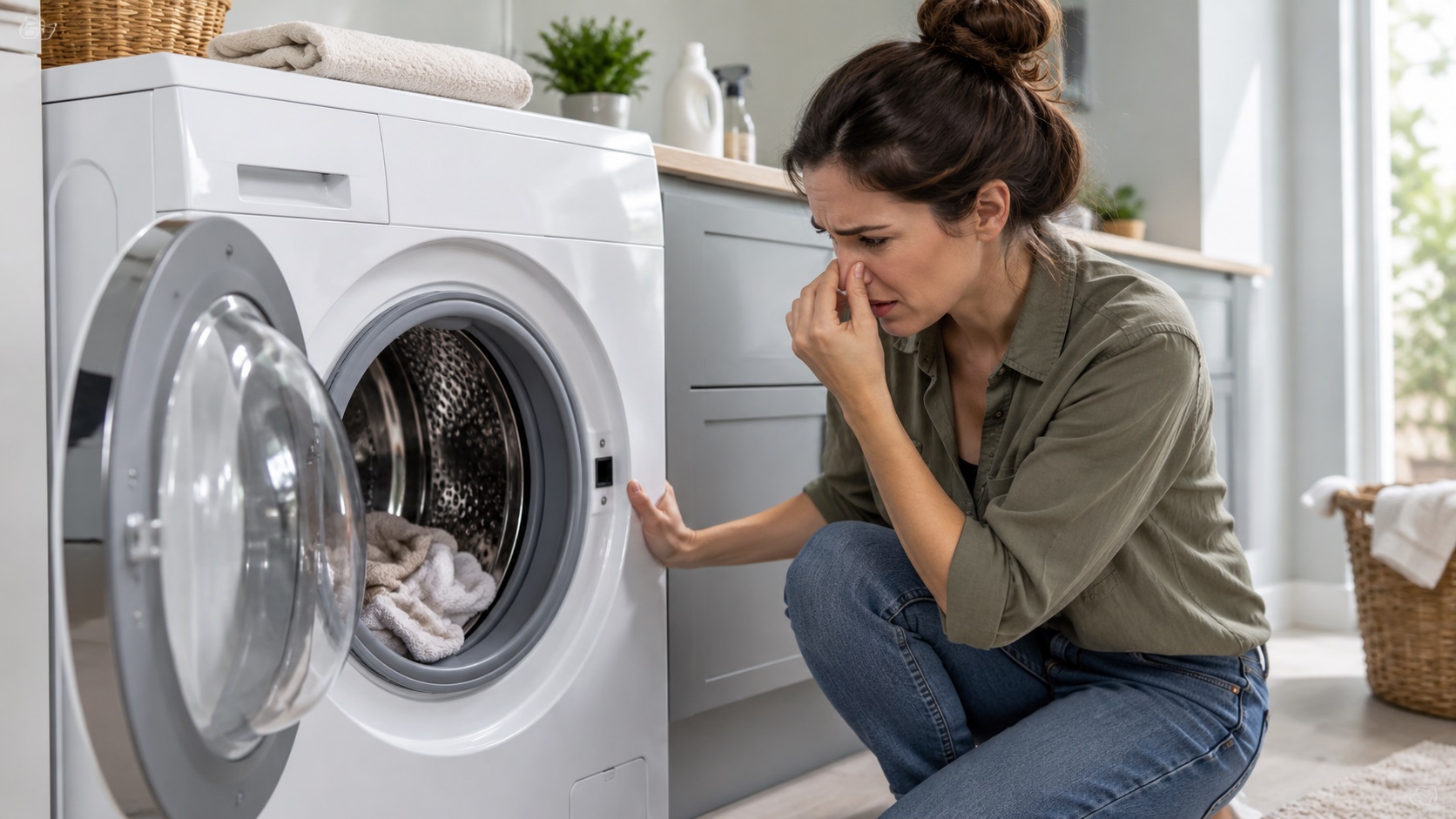
If your washing machine smells unpleasant when you open the door, the problem may not be a mechanical failure. In many cases, bad odors are caused by moisture, detergent residue, dirt, mold, or poor maintenance.
This is especially common with front-load washing machines, where water and detergent residue can accumulate inside the rubber door gasket.
The good news is that many odor problems can be solved at home with proper cleaning and maintenance.

- 1. A Dirty Door Gasket
- What to do:
- 2. Too Much Detergent
- 3. A Dirty Detergent Drawer
- 4. Wet Clothes Are Left Inside Too Long
- 5. The Door Is Always Kept Closed
- 6. The Pump Filter Needs Cleaning
- 7. The Washing Machine Needs a Cleaning Cycle
- How to Find Where the Smell Comes From
- 1. Rubber door gasket
- 2. Detergent drawer
- 3. Drum
- 4. Pump filter
- 5. Drain connection
- How to Get Rid of the Smell
- Should You Use Vinegar?
- What About Baking Soda?
- How to Prevent Washing Machine Odors
- How Often Should You Clean a Washing Machine?
- When the Problem May Not Be Dirt
- Final Takeaway
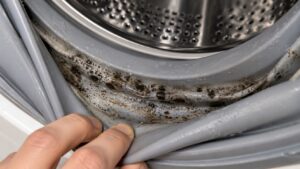
1. A Dirty Door Gasket
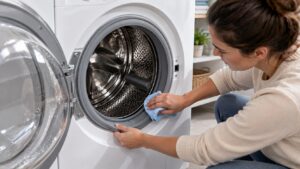
The rubber gasket around the washing machine door is one of the first places you should check.
Pull the rubber seal back and inspect the folds carefully. Hair, lint, dirt, detergent residue, and water can collect inside.
Because the area stays damp, it can eventually develop mold and an unpleasant musty smell.
What to do:
-
Open the washing machine door.
-
Pull back the rubber gasket.
-
Remove any visible dirt or foreign objects.
-
Wipe the folds with a clean cloth.
-
Dry the gasket thoroughly.
If you find mold or heavy contamination, use only a cleaning product that is compatible with your washing machine and follow the manufacturer’s instructions.
2. Too Much Detergent
More detergent does not necessarily mean cleaner clothes.
Using more detergent than recommended can leave residue inside the washing machine. Over time, this residue can combine with moisture and dirt and contribute to unpleasant odors.
Always follow the detergent dosage recommended for your machine, detergent type, water hardness, and load size.
The idea that “more detergent means cleaner clothes” is usually a mistake.
3. A Dirty Detergent Drawer
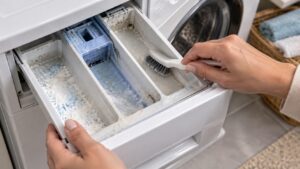
Pull out the detergent drawer and inspect it carefully.
If you see a buildup of detergent, fabric softener, slime, or dark spots, it needs to be cleaned.
Remove the drawer and wash it with warm water. A soft brush can help remove stubborn residue.
Do not forget to clean the compartment where the drawer sits. Residue can accumulate there as well.
4. Wet Clothes Are Left Inside Too Long
One of the simplest causes of unpleasant odors is leaving wet clothes inside the washing machine for several hours.
After the wash cycle finishes, remove the clothes as soon as reasonably possible.
If wet laundry sits inside a closed washing machine for a long time, it can develop a musty smell that may remain even after the clothes are removed.
If the laundry already smells bad, it may need to be washed again.
5. The Door Is Always Kept Closed
A washing machine remains damp after a wash cycle.
If you immediately close the door, moisture has fewer opportunities to escape.
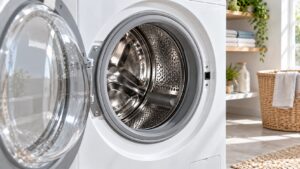
For many front-load machines, leaving the door slightly open between cycles helps the interior dry.
You can also wipe the rubber gasket with a dry cloth after washing.
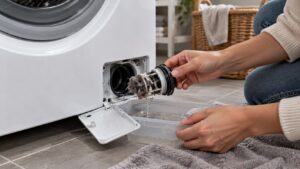
6. The Pump Filter Needs Cleaning
Many front-load washing machines have a pump filter located behind a small access panel near the bottom of the machine.
Depending on the model, the filter can collect lint, hair, coins, small objects, and other debris.
A dirty filter can contribute to unpleasant odors and drainage problems.
Before opening the filter, check your washing machine’s manual. Water may come out when the filter is opened.
7. The Washing Machine Needs a Cleaning Cycle
A washing machine can look clean while residue and dirt are accumulating inside areas you cannot easily see.
Many modern washing machines have a dedicated cleaning program such as:
-
Drum Clean
-
Tub Clean
-
Clean Washer
-
Self Clean
If your machine has such a program, use it according to the manufacturer’s instructions.
Some manufacturers recommend running a cleaning cycle approximately once a month or after a certain number of wash cycles. The correct frequency depends on the model.
How to Find Where the Smell Comes From
If your washing machine has recently developed an unpleasant smell, check these areas first:
1. Rubber door gasket
Pull it back and inspect the folds.
2. Detergent drawer
Look for detergent and fabric-softener buildup.
3. Drum
Check whether the smell is strongest inside the drum.
4. Pump filter
If your machine has an accessible filter, inspect it according to the manufacturer’s instructions.
5. Drain connection
If the smell resembles sewage, the problem may not be inside the washing machine at all.
The drain hose or plumbing connection may need to be checked.
How to Get Rid of the Smell
Start with basic cleaning:
-
Remove all laundry from the machine.
-
Clean the rubber door gasket.
-
Wash the detergent drawer.
-
Clean accessible parts of the drum.
-
Check the pump filter if your model has one.
-
Run the manufacturer’s recommended cleaning cycle.
-
Leave the door open afterward so the machine can dry.
Do not mix different cleaning products.
Never assume that two household cleaning products are safe to combine simply because each product is safe when used separately.
Should You Use Vinegar?
Vinegar is often recommended online as a universal washing machine cleaner, but it should not automatically be considered suitable for every washing machine.
Some manufacturers specifically advise against regular vinegar use because acidic products may affect certain components over time.
The manufacturer’s instructions for your particular model should always take priority over generic cleaning tips found online.
What About Baking Soda?
Baking soda is another popular home-cleaning remedy.
However, just because a cleaning method is common online does not mean it is appropriate for every washing machine.
If you want to use baking soda or another household product, check the manufacturer’s recommendations first.
How to Prevent Washing Machine Odors
A few simple habits can greatly reduce the chance of bad smells returning:
-
Remove wet laundry promptly.
-
Leave the door slightly open after washing.
-
Wipe the rubber gasket regularly.
-
Clean the detergent drawer.
-
Do not use excessive amounts of detergent.
-
Clean the pump filter according to the manufacturer’s instructions.
-
Run the machine’s cleaning cycle regularly.
-
Keep the washing machine and surrounding area reasonably dry.
-
Check the drain connection if the smell resembles sewage.
How Often Should You Clean a Washing Machine?
There is no single schedule that works for every washing machine.
As a general reference, some manufacturers recommend cleaning approximately once a month or after around 30 wash cycles.
However, the correct schedule depends on your machine, how frequently you use it, the detergent you use, water conditions, and the manufacturer’s recommendations.
If you notice an odor, visible buildup, or mold, it is a good reason to inspect and clean the machine sooner.
When the Problem May Not Be Dirt
If the smell returns quickly after proper cleaning, do not keep adding more cleaning products.
A persistent sewage-like smell, drainage problems, unusual noises, or other symptoms may indicate an issue with the drain system, pump, hose, or another component.
In that situation, professional inspection may be necessary.
Final Takeaway
Most washing machine odors are related to a combination of moisture, detergent residue, and accumulated dirt.
Start by checking the rubber door gasket, detergent drawer, drum, and pump filter.
Remove wet laundry promptly and allow the machine to dry between cycles.
And if the smell continues after proper cleaning, investigate the drain connection or have the machine inspected by a qualified technician.